
Guest blog: Liselot Appelo
One of the greatest privileges of publishing Breaking Free has been hearing from readers whose lives have been touched by Jan Rothney's work. Dutch artist Liselot is one of those readers. After recovering from Long Covid, she created the beautiful painting featured at the end of the second edition and kindly shared the story behind it with us.
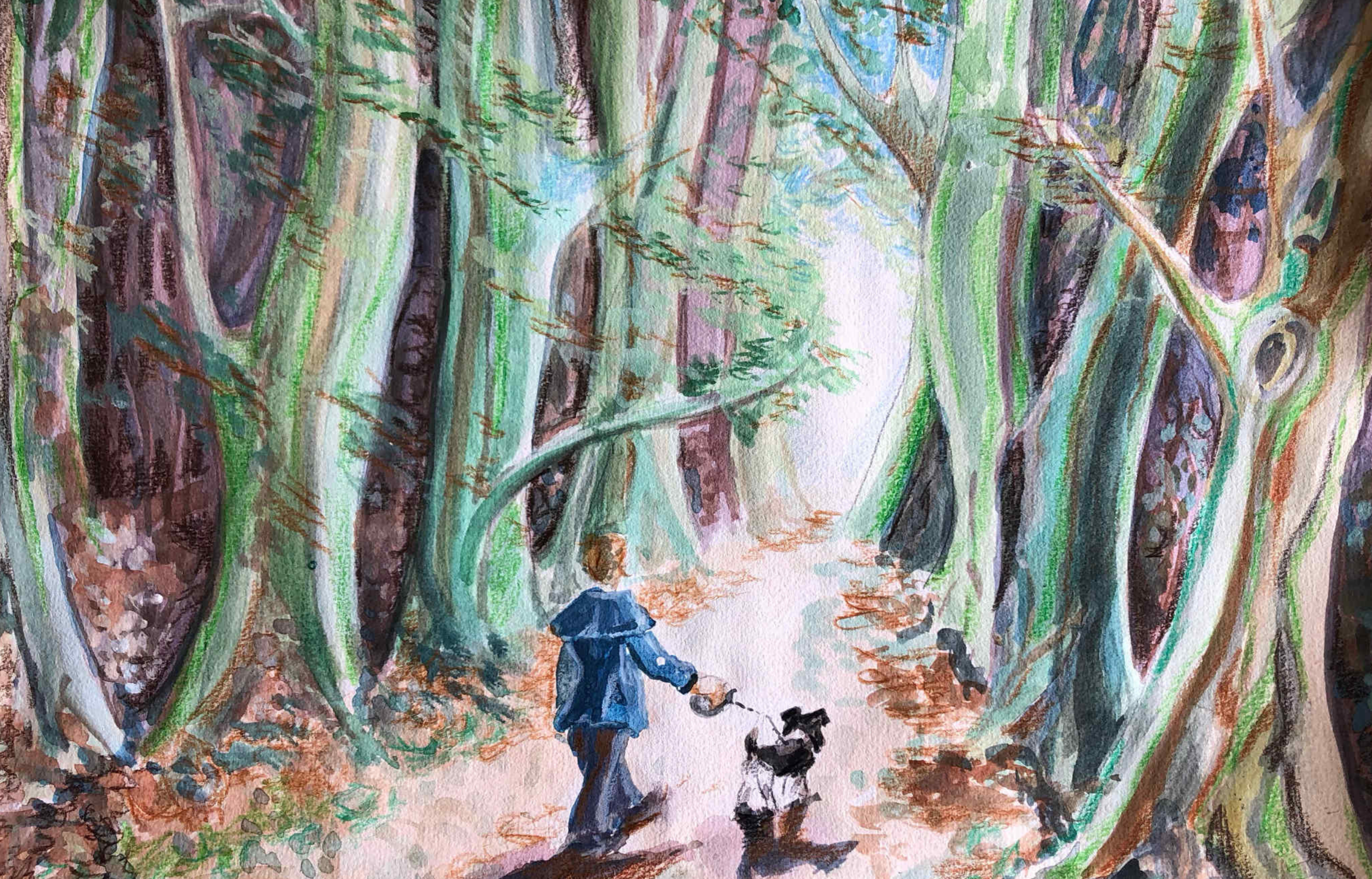
I contracted COVID-19 in October 2020, during the second wave of the pandemic. Initially, it felt like a severe flu, but nothing more—except for the fact that I was, and remained, extremely fatigued. When there was no improvement after three weeks, I consulted my GP; she told me to give it another four weeks to recover and to call back if things didn't get better. After those four weeks, however, my condition had actually deteriorated. I developed strange symptoms: shooting pains in my knee, pressure on my chest and between my shoulder blades, extreme sensitivity to stimuli, and headaches that lasted for days. My energy levels remained stuck at just 10–20% of what I was used to. My GP referred me to a COVID rehabilitation program fairly quickly. For six months, I underwent occupational therapy, physiotherapy, exercise therapy, and followed a specific diet. I learned how to pace my limited energy throughout the day, which left me slightly less exhausted in the evenings than before. I tried to return to work, but it proved very difficult. I worked four days a week in special education—a job I truly enjoyed—but I eventually had to conclude that I could no longer manage it.After two years of trying to reintegrate into the workforce, I suffered a major setback and had to apply for disability benefits (WIA). It was then that I first noticed my symptoms during this relapse were the same as those I’d experienced in the early weeks of my "corona journey"—and that got me thinking. How could I be experiencing shortness of breath and chest pain again? That surely had absolutely nothing to do with the virus anymore! My GP recommended antidepressants to treat the headaches, but I wasn't keen on that idea. There had to be another answer. This relapse lasted a full two months; during that time, two fellow patients gave me two books: *The Way Out* by Alan Gordon and *Breaking Free* by Jan Rothney. At first, I struggled to relate the examples in Alan Gordon’s book—which focused mainly on back and neck pain—to my own situation. After all, I was exhausted! However, I came to understand that symptoms can actually be generated by the brain. From Jan Rothneys book, I learned that emotions and the fear of symptoms trigger a survival response. Slowly, I realized that this was the key to breaking the vicious cycle—the pattern of illness I kept falling back into.I started rereading the books and simply doing exactly what they said, and I improved tremendously! I came to understand that fear and pain go hand in hand and that our emotions can trigger our brain’s survival mode—that our physical symptoms are initiated by the brain to tell us something, and that figuring this out can be quite a journey.From then on, I understood that I needed to approach my symptoms and feelings through a mind-body lens, and I learned to treat my body and brain with patience and love—as if my brain were a little girl who had fallen and needed a bandage on her knee. That is how I got back on my feet. Taking good care of myself, tuning into bodily sensations (somatic tracking), and no longer viewing my symptoms as alarming helped me heal, even though the process took longer than I had wanted. After that I recovered and started doing art again and painted my story into pictures. This painting is a painting of hope. Even if an illness can take a long time, you have to realise it does not have to be forever! There will be a day you are walking the dog in your favourite forest and feel free and fit again!With love, Liselot 